October 12, 2026
When most of us think about school, we picture a familiar scene: a teacher standing at the front of the room, writing on a board, delivering a lesson, and directing the entire class on what to do next. Traditional education relies on teachers to give information, provide instruction, and manage the room.
In an AMI Montessori environment, however, the role of the adult is much more nuanced.
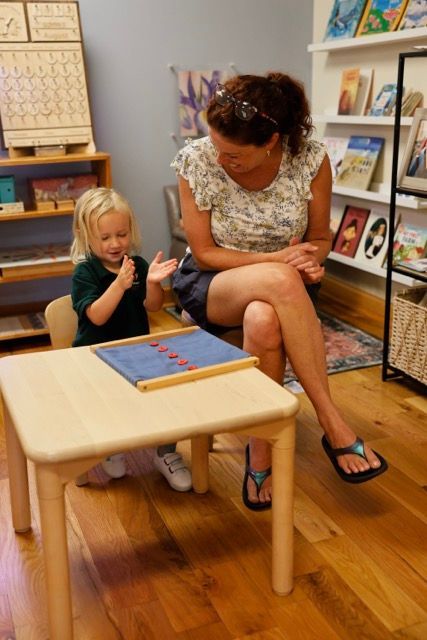
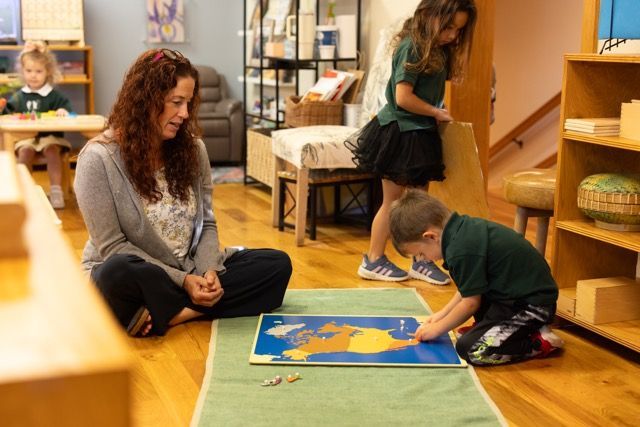
If you walk into a Primary or Elementary classroom at OakHaven Montessori School, you might actually have to look around for a moment to spot the adults. Our Guides (teachers) are rarely at the front of the room. Instead, you will find them sitting on the floor beside a child, giving a quiet one-on-one presentation, or observing the room from a deliberate distance.
For parents accustomed to traditional schooling, this can feel unfamiliar. How do children learn if the teacher isn't actively "teaching" the whole room?
Traditional vs. Montessori: A Shift in Perspective
In traditional models of education, children have historically been viewed as blank slates or empty vessels waiting to be filled with information. The teacher’s job is to pass down facts, offer corrections, and validate work. To keep a whole room of children moving at the exact same pace, traditional classrooms often rely on external motivators like grades, reward charts, or tests.
At OakHaven, we see children through a completely different lens. We view each child as a unique individual filled with immense potential, natural curiosity, and a drive to understand their world.
Rather than sitting passively listening to a lecture, children learn best when they are active participants in their own education. Our classrooms are thoughtfully prepared with specialized, hands-on materials that allow children to explore, discover, and internalize complex concepts independently. The material itself carries the lesson; the adult simply serves as the bridge connecting the child to that work.
Capturing the Imagination, Not Just Giving Answers
When an OakHaven Guide presents a lesson to a child or a small group, the goal is rarely to just hand over a quick answer or formula.
Whether introducing the Bank Game in Primary or exploring the Story of Communication in Elementary, our Guides share just enough to pique a child’s curiosity and ignite their imagination. We don't want to simply tell a child how compound multiplication works, list the countries of South America, or define the parts of speech.
Instead, our Guides offer key lessons that inspire children to return to the materials again and again. Through their own repetition and exploration, children independently uncover the mathematical proof, geographical detail, or grammatical rule. The joy of discovery belongs entirely to the child.
Why We Use the Word "Guide"
Because our focus is on supporting each child’s individual path rather than directing a crowd, we refer to our classroom teachers as Guides.
This shift in language reflects the heart of our practice:
- Traditional Teachers lead from the front, setting the pace for the collective group.
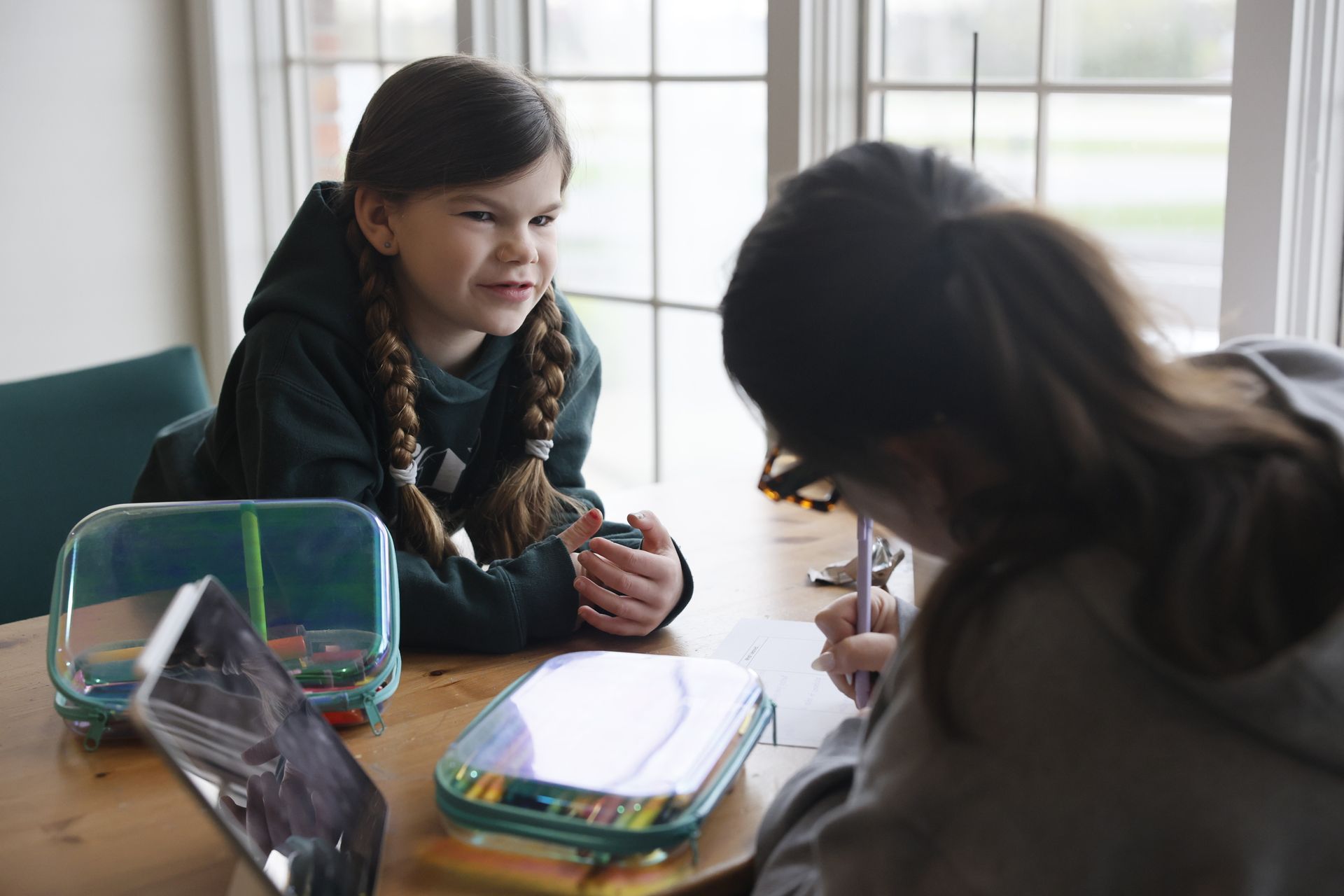
- Montessori Guides walk alongside the child, observing individual needs and offering the precise support needed at that exact point in their development.
Like the rudder of a ship, an OakHaven Guide helps steer the child’s natural energy, making subtle adjustments and offering new challenges along the way. The result is a vibrant environment where children develop deep concentration, executive function, and a genuine, lifelong love for learning.
Experience the OakHaven Difference
Understanding the role of a Montessori Guide is one thing, but seeing it in action is where it truly comes to life. Watching a classroom of focused, joyful children directing their own learning while a guide quietly observes is an unforgettable experience.
Whether you are considering our Primary program (ages 2.5–6) or our Elementary program (ages 6–12), we invite you to
step into our environments and see our compassionate guides at work.