September 21, 2026
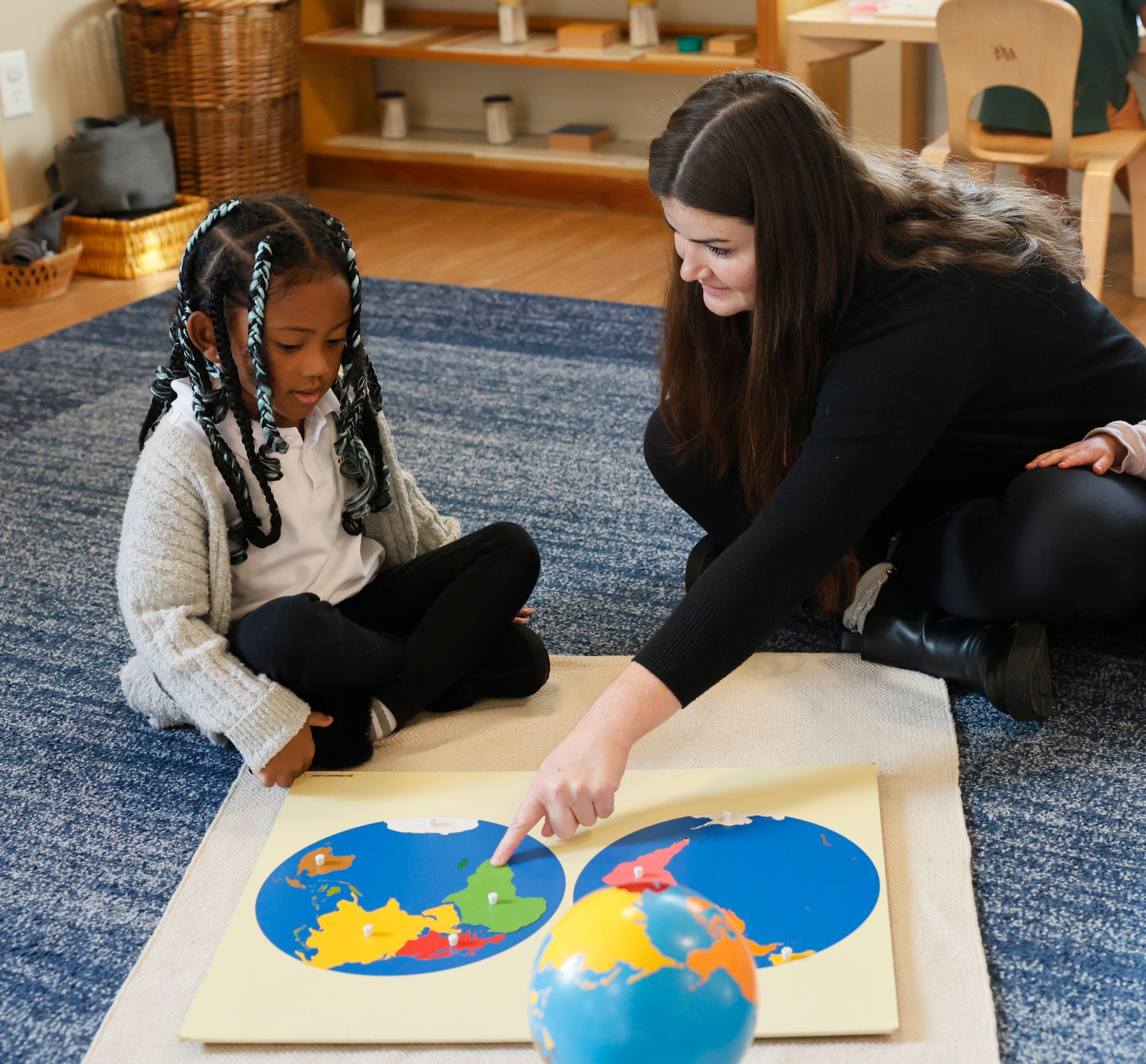
In Montessori education, we use a beautifully precise, time-tested technique to connect children with new vocabulary and concepts: The Three-Period Lesson.
Developed by Dr. Maria Montessori and derived from the work of French physician Édouard Séguin, this structured approach introduces and reinforces concepts in a way that aligns seamlessly with a child’s natural neurological development.
Whether an OakHaven Guide (teacher) is introducing color names to a young Primary child or presenting geometric terms to an Elementary student, the Three-Period Lesson unfolds in three distinct phases: Naming, Association, and Recall.
Period 1: Naming (Isolation and Precision)
In the first period, the Guide creates a direct connection between an object or sensory experience and its precise name.
The power of this step lies in its simplicity. OakHaven Guides execute this phase with exactitude, taking great care to isolate the property being taught and avoiding extra words that might cause confusion.
For example, when introducing temperature concepts using thermic bottles:
- The Guide isolates the hottest and coldest bottles in the set.
- The Guide feels the warm bottle, invites the child to feel it, and states clearly: "This is hot."
- The Guide repeats the exact process with the cold bottle: "This is cold."
The emphasis remains on clear articulation and precise vocabulary. The goal of Period 1 is to link the child's vivid sensory experience with the exact language for it, fixing the impression in the child's mind without cluttering the moment with unnecessary commentary.
Period 2: Association and Recognition (The Heart of the Lesson)
Once the initial connection is made, the lesson moves into the second period: Association. Here, the Guide checks whether the child recognizes the object or concept when given the word.
This period is intentionally designed as a playful, energetic movement phase where the child hears the vocabulary repeated in various contexts without feeling put on the spot to say the words themselves.
Using a cylinder block as an example, the Guide might ask:
- "Which one is large?"
- "Which one is small?"
- "Place the large cylinder in my hand."
- "Point to the small cylinder."
Period 2 is always the longest and most important of the three periods. Every time the child responds to a command, synaptic connections in the brain are strengthened, reinforcing their memory and internalizing the concept.
Graceful Redirection Without Correction
If a child hesitates or points to the wrong item during this period, our Guides never correct them or say "no." Pointing out an error can cause a child to feel self-conscious or defeated.
Instead, the Guide recognizes that the child simply needs more time or experience with the material sensorially. The Guide will either return gracefully to Period 1 or end the lesson warmly, bringing the material out again on another day.
Period 3: Recall (Verification of Knowledge)
The final stage serves as a gentle verification that the child has retained the association and can independently produce the vocabulary from memory.
For the first time in the lesson, the Guide steps back from providing the word and points to the material, asking a simple question:
- "What is this?"
If the child responds confidently (e.g., "Hot" or "Large"), the Guide knows the concept has been successfully integrated. If the child hesitates, the Guide quietly brings the lesson to a close or re-names the item without fuss, ensuring the child leaves the lesson with a positive, accurate impression.
Why the Three-Period Lesson Is So Powerful
This quiet, intentional approach is highly effective for three reasons:
- Respects Individual Pace: Concepts are broken down into manageable steps, allowing children to move forward only when they feel truly ready and secure in their understanding.
- Promotes Active, Hands-On Engagement: Children are not passive listeners; they interact physically and mentally with the materials throughout the lesson.
- Connects the Concrete to the Abstract: By pairing hands-on sensory materials with precise language, children form meaningful cognitive links that lay the foundation for higher-level abstract thinking.
Above all, the beauty of the Three-Period Lesson lies in its quiet elegance. The lessons are brief, the language is exact, and the outcome is profound.
Experience the Montessori Difference
Observing a Guide deliver a Three-Period Lesson in one of our prepared environments offers a wonderful window into how children develop deep concentration and mastery at OakHaven.
We invite prospective families across Dardenne Prairie, O'Fallon, and St. Charles County to
schedule a tour and see our classroom environments in action!