August 24, 2026
Imagine education from a fresh perspective—one that sees children not as empty vessels waiting to be filled, but as whole individuals embarking on a lifelong journey of self-formation. From the moment of birth, children are driven by powerful internal forces that guide their growth and help them adapt to their unique time, place, and culture.
At OakHaven Montessori School, our approach to education is built upon this profound understanding of human development. Dr. Maria Montessori dedicated her life's work to observing how children grow and change, identifying distinct stages that shape their path to maturity. Through her scientific work, she identified the four planes of development, each with its own unique characteristics, psychological needs, and tendencies.
In this blog post, we are diving into the first plane of development—birth to age six. Understanding this foundational stage allows us to better partner with our children, supporting them as they grow into capable, independent individuals right here in our Dardenne Prairie community.
The Extraordinary First Six Years
The first plane of development is a period of monumental psychological and physical growth. A newborn enters the world entirely dependent on their primary caregivers. Yet, within just six years, that same child is walking, talking, reasoning, and confidently asserting their independence.
During this transformative stage, the child possesses what Dr. Montessori called the absorbent mind. Without effort or conscious filtering, young children absorb every sight, sound, language pattern, and emotional nuance in their environment, using these impressions to construct their own personality and intellect.
The Conquest of Functional Independence
One of the primary driving goals for a child in the first plane is achieving functional independence. They are naturally inclined to observe the adults around them and imitate their actions, driven by a desire to master their own bodies and navigate the physical world. The universal mantra of the child during these years is simple: “Help me do it myself!”
To aid the child in this conquest, they experience what are known as sensitive periods. These are temporary windows of intense fascination and opportunity when a child is uniquely receptive to acquiring specific skills:
- Movement: The child has a vital need for both gross and fine motor movement to develop brain-body integration and physical coordination.
- Order: Young children crave external order and consistency in their daily routines to help them make sense of their surroundings.
- Language: This is a critical period where children absorb words, syntax, and spoken language effortlessly from the adults around them.
A Tale of Two Sub-Planes
The first plane of development is naturally divided into two distinct sub-phases, shifting from unconscious absorption to conscious creation:
From Birth to Age Three: The Unconscious Creator
During the first three years, a child’s development is largely unconscious, driven by innate evolutionary forces. They absorb their environment completely. In this phase, their social circle is intentionally small, centered around the safety of the family home. They absorb the foundations of human speech—progressing from subtle vocal cord vibrations to a spoken vocabulary that often reaches hundreds of words by age two.
From Age Three to Six: The Conscious Worker
As children reach their third year, their development shifts. They become consciously aware of their actions, their willpower emerges, and they feel a powerful drive to classify, organize, and understand the experiences they have already absorbed.
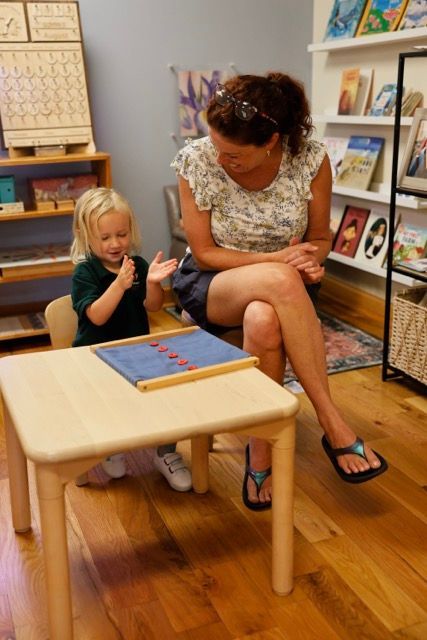
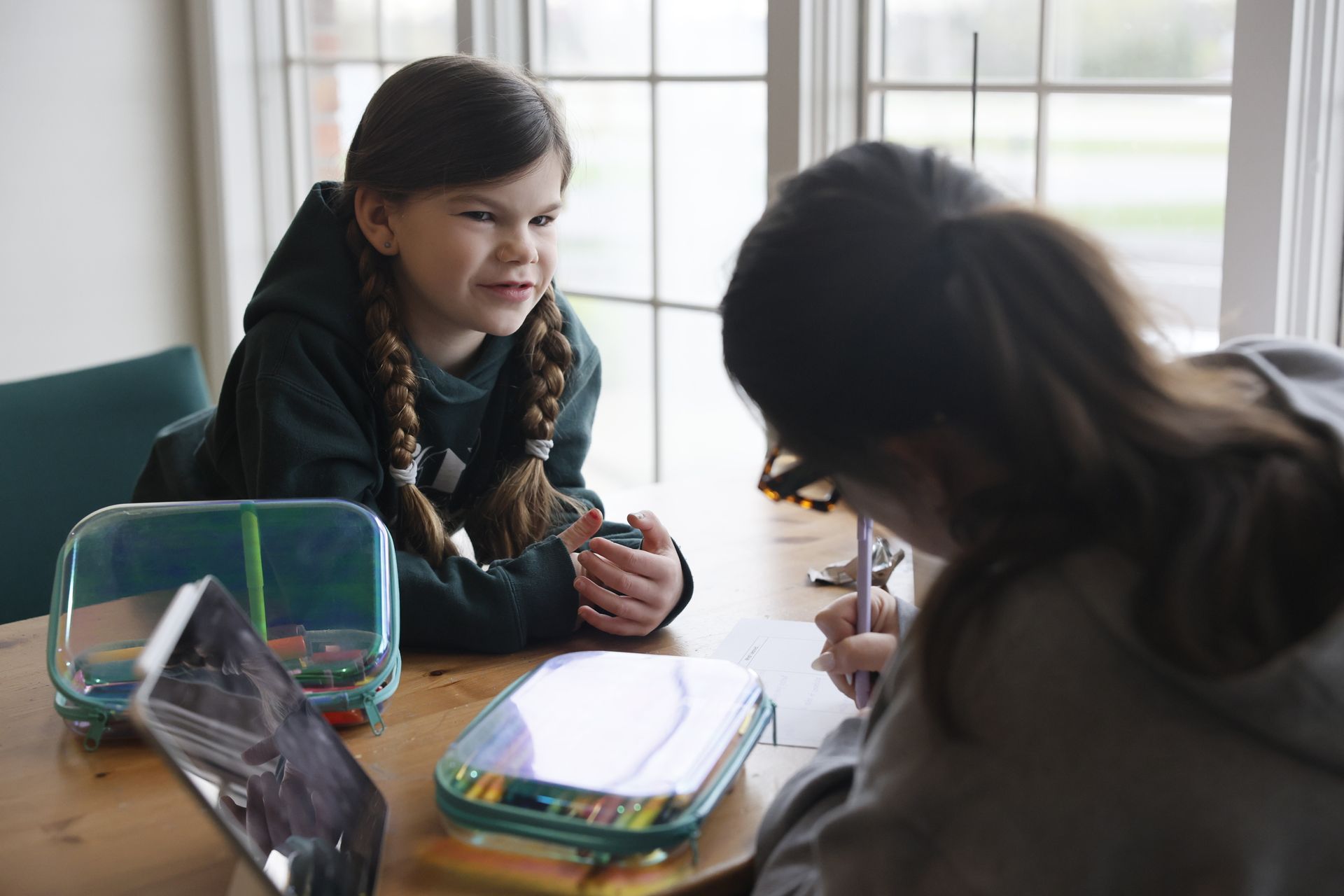
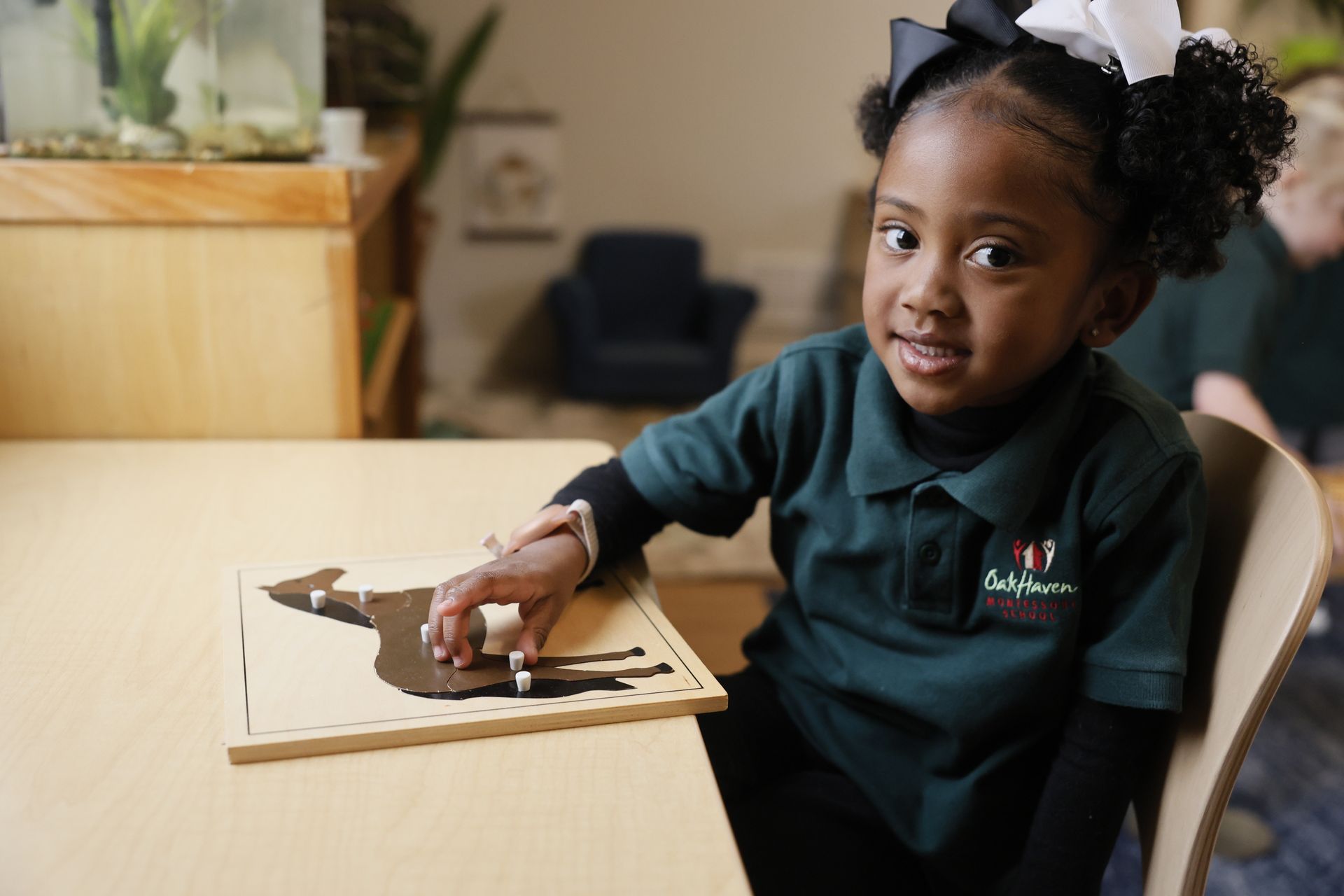
This is the precise stage where children typically enter our Primary environment at OakHaven. Around age three, children naturally begin seeking a broader social experience beyond the immediate family unit. They are ready to interact with a community of peers, learn the nuances of cooperation, and pour their immense focus into purposeful activities.
Creating a Supportive Environment at Home and School
To satisfy the intense developmental needs of the first plane, adults must focus on preparing the environment rather than trying to manage or restrict the child's natural growth. Whether in our multi-age Primary classrooms or in your own home in St. Charles County, an optimal environment provides:
- Freedom of Movement and Exploration: Allowing children the space to safely explore both indoor and outdoor spaces without unnecessary intervention.
- Rich Language Exposure: Speaking to children clearly, reading high-quality literature, and offering precise vocabulary for the objects around them.
- Opportunities for Real Contribution: Involving children in daily routines—such as preparing a snack, setting the table, or wiping up a spill—which builds physical coordination and a deep sense of belonging.
When we understand the natural blueprint of the first six years, we can stop fighting against a child's behavior and start serving their true developmental needs.
Experience the Primary Environment: Our AMI recognized Primary classrooms are specifically designed to meet the exact developmental needs of children from 2.5 to 6 years old. If you would like to see how our prepared environments support this remarkable stage of independence, we invite you to schedule a tour.